
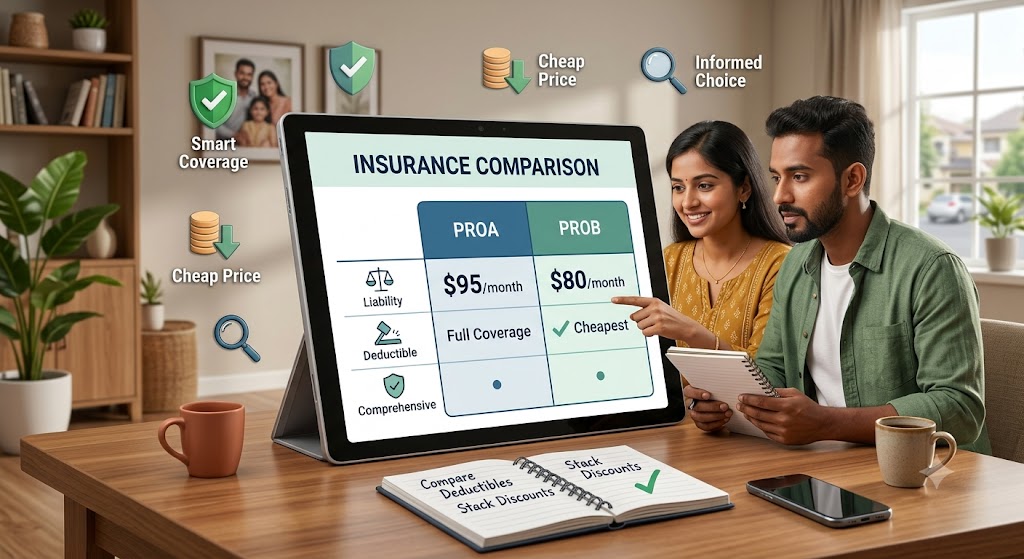
Cut too many corners, and you could end up underinsured when you actually need to file a claim. But stick with the same provider out of habit, and you might be overpaying by hundreds of dollars every year.
The key isn't just finding the absolute lowest price—it's getting maximum coverage for minimum cost. Here is a simple framework to compare auto insurance quotes side-by-side effectively.
1. Match Your Coverage Limits Exactly
The most common trap when using comparison tools is accidentally comparing apples to oranges. A quote might look $40 cheaper per month simply because it quietly dropped your collision limit or doubled your deductible.
Before pulling quotes, grab your current policy's Declarations Page (the summary page listing your current limits). Ensure every quote you pull uses identical numbers for:
-
Liability Limits: Bodily injury and property damage coverage.
-
Comprehensive & Collision Deductibles: Keep these consistent (e.g., $500 vs. $1,000) across all quotes.
-
Add-ons: Roadside assistance, rental car reimbursement, or gap insurance.
2. Benchmark Against the Big 3 Pricing Factors
Insurance rates are calculated using complex risk algorithms, but three main variables drive the bulk of your price:
| Factor | Why It Affects Your Rate | How to Optimize It |
| Driving Record | Accidents, tickets, or claims signal higher risk to underwriters. | Take a state-approved defensive driving course to erase minor points. |
| Location / ZIP Code | Dense urban areas or storm-prone zones carry higher claim risks. | Ask about discounts for off-street or garage parking. |
| Vehicle Make & Model | Repair costs and safety features dictate the base premium. | Vehicles with high-tech driver-assist features are safer, but cost more to repair. |
3. Stack Discounts Before Finalizing
Once you narrow down 2–3 low-cost options, check which provider offers the best stackable discounts:
-
Bundling: Combining auto with home or renters insurance often cuts premiums by 10% to 25%.
-
Telematics / "Pay How You Drive": Opting into a mobile app or plug-in device that tracks your driving habits can offer deep discounts if you drive conservatively.
-
Autopay & Paperless: Simple administrative opt-ins that instantly knock $5–$10 off your monthly bill.
A Note on Comparison Sites: Online quote aggregators are great for a quick baseline, but remember that quotes are estimated initial figures. Your final price depends on full underwriting verification (driving history checks and credit score, where applicable).